WOW: Google’s AI Co-Scientist Writes Better Research Ideas Than You (AI NEWS)
In this video, I explore one of the most exciting developments in AI for scientific research: the Google AI Co-Scientist. While there’s been a flood of tools claiming to help with literature reviews and idea generation, this one actually shifts the game. ▼ ▽ Sign up for my FREE newsletter Join 21,000+ email subscribers receiving the free tools and academic tips directly from me: https://academiainsider.com/newsletter/ ▼ ▽ MY TOP SELLING COURSE ▼ ▽ ▶ Become a Master Academic Writer With AI using my course: https://academy.academiainsider.com/courses/ai-writing-course Instead of acting like a passive assistant, the Google Go-Scientist agent behaves more like a thinking partner — running debates with itself, refining hypotheses, and helping researchers develop meaningful directions for their work. It’s not just about speed; it’s about raising the quality of what gets proposed in the first place. What fascinates me is the structure of this multi-agent system. Unlike traditional AI tools that generate content based on prompts (think OpenAI’s ChatGPT), Google’s system uses a coordinated team of agents — each with its own role in reviewing, ranking, or generating ideas — to simulate something much closer to actual scientific collaboration. And what that means for researchers is a new kind of workflow, one that could reshape how we begin and prioritize research projects. One of the most impressive outcomes of this approach was the Google AI antibiotic discovery — a moment where the system identified previously unknown treatment candidates by sorting through massive volumes of biomedical data. It didn’t just find something novel; it found something useful. This points to the broader potential of these systems to influence real-world research far beyond just helping with your thesis or lab design. I’m especially interested in what this means for academics under pressure to be productive. When the volume of new information becomes overwhelming, tools like this can act as filters — not replacing human reasoning, but enabling us to focus on what actually matters. Whether you’re a PhD student or just following the latest AI news, this shift could be a major part of how science is done in the next decade. ………………………………………… ▼ ▽ TIMESTAMPS 00:00 Intro 00:12 AI Co-Scientist 01:33 1st thing you should know 04:41 What Google said… 05:18 How it has been tested 05:50 Case Studies 06:59 The Second thing you should know 07:50 3rd Discovery made 09:18 Other Discoveries from Google Co-Scholar 11:45 Outro ………………………………………… ▼ ▽ Socials for shorts and reels Instagram: https://www.instagram.com/drandystapleton/ TikTok: https://www.tiktok.com/@drandystapleton
More videos
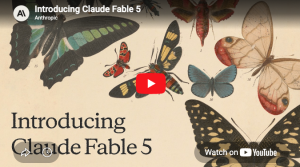
Claude Fable 5: When Capability Meets Economics
Anthropic released Cloud Fable 5 with a paradox built in: safeguards sophisticated enough to let a mythosclass model...

Run Agentic AI Entirely on Your Mac—No Cloud, No Latency, No Privacy Tradeoffs
Apple’s MLX framework is mature enough now that you can run serious agentic AI workflows locally on Silicon...

Hermes Agent Master Class
Welcome to the Hermes Agent Master Class — an 11-episode series taking you from zero to fully leveraging...