Ignorance Is Bliss
The state moved on AI this week — a toothless order on top, a populist revolt underneath. Everyone wants the steak. Nobody wants to watch the cow get butchered.
THE NUMBER: 50% — the share of OpenAI, Anthropic, and xAI that Bernie Sanders’ new bill would tax straight out of their stock and hand to a public wealth fund, with board seats and voting rights attached. It will not pass. In four decades Sanders has been the lead sponsor on almost nothing that became law. But the number isn’t the point. The point is that a sitting senator can say “the public should own half of the frontier labs” out loud and have it land as something other than a joke. A year ago it would have been a joke. The mood that turned it into a real sentence is the actual story, and it didn’t come from Washington. It came from a graduation stage.
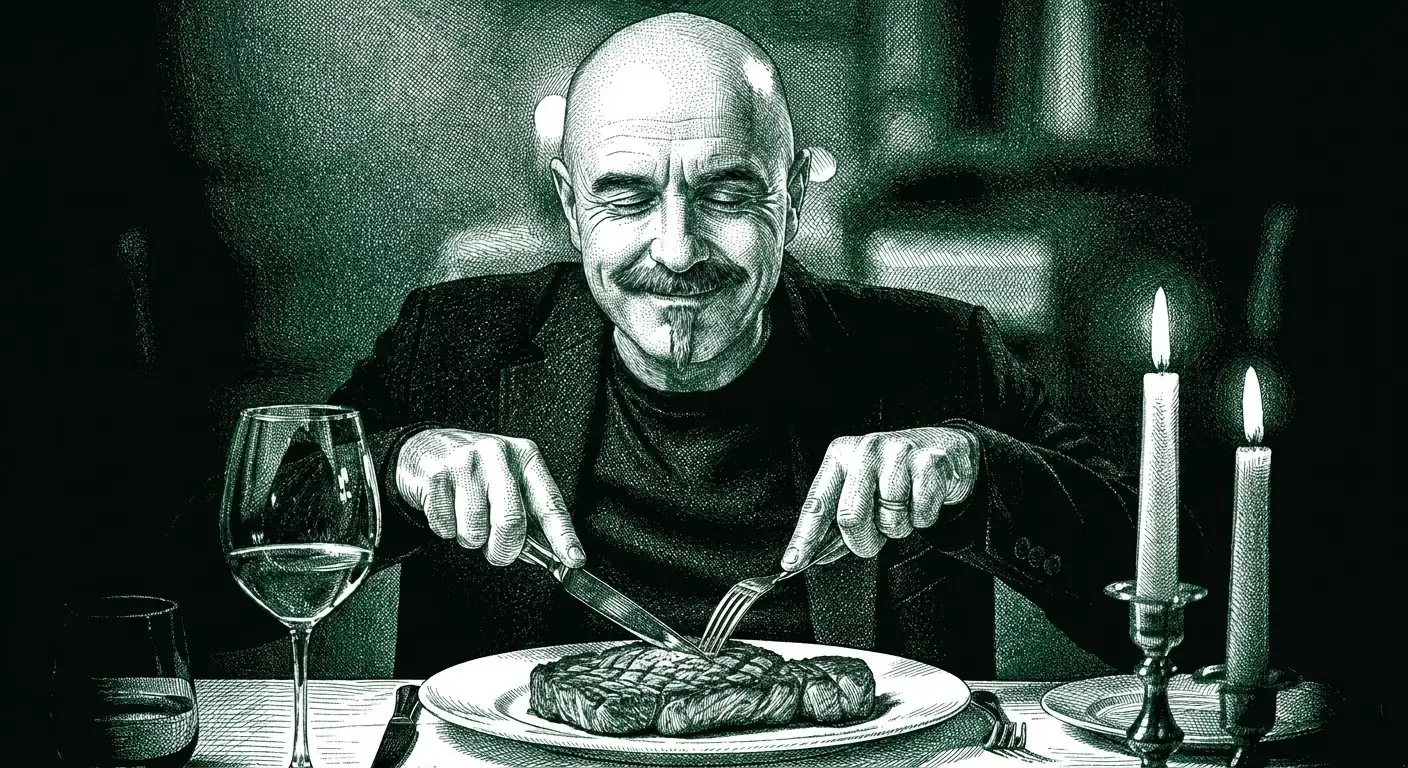
In The Matrix, the best betrayal happens over dinner. Cypher sits across from Agent Smith in a steakhouse that doesn’t exist, cutting into a steak that doesn’t exist, and explains the deal he wants. He knows the steak is a lie. He knows the machines are telling his brain it’s juicy and delicious. And after nine years of fighting for the cold, ugly truth, he’s made his decision: he’d rather have the lie. Plug me back in, he says. Make me rich. Make me somebody important, like an actor. And whatever you do, don’t let me remember any of this. Three words carry the whole scene — ignorance is bliss — and they’re the most honest thing anyone says in the movie. Cypher isn’t fooled. That’s what makes him dangerous. He sees the cost perfectly and chooses not to look at it.
That scene played out across the entire AI conversation this week, except nobody was as honest about it as Cypher. A class of college graduates booed the technology they cheated their way through school with. A senator demanded half the equity of an industry whose product he uses like everyone else. A president signed an order that pretends to govern AI while governing nothing. And a super PAC funded by the people who build the machine got caught faking the voices of the people who fear it. Four different forks going into the same steak, every one of them with the eyes closed.
Pull the thread and they’re not four stories. They’re one. Everybody wants what AI gives them. Nobody wants to admit what it costs. And this week, for the first time, the cost started sending its bill to the one address that can actually do something about it — the government.
🎓 The Mood Turned on a Graduation Stage
Start where it actually started, which is not in a committee room. On May 15, the graduating class of the University of Arizona booed Eric Schmidt — former CEO of Google, one of the men who paid for the world they’re graduating into — off the commencement stage. His offense was mentioning AI. A week before that, students at the University of Central Florida booed a speaker for calling AI “the next industrial revolution.” At Middle Tennessee State, they booed Scott Borchetta, the record executive who discovered Taylor Swift, until he stopped his prepared remarks and said the truest thing of the whole commencement season: “It’s a tool. Make it work for you.” They booed harder.
Sit with that, because it’s the tell for everything else. These are not Luddites who’ve never touched the technology. These are the heaviest users alive. They ran four years of essays, problem sets, and take-home exams through ChatGPT and Claude. They are the first graduating class in history whose diplomas were, in meaningful part, written by the thing they stood up to boo. CNBC, covering the wave, found the through-line in one phrase: an “ambient anxiety that AI is going to make things dramatically worse.” Not the technology in the abstract. Their jobs. Their entry-level rung. The ladder they just spent $200,000 to climb, suddenly looking like it’s been sawed off two stories up.
Let me part ways with the easy version of this story, the one where AI is the villain ruining a generation. That’s lazy, and it’s wrong. Watch what’s actually happening to these kids and you see two piles forming, not one. In the first pile are the graduates who used the tool as a crutch — who let it do the thinking, atrophied the one muscle the diploma was supposed to certify, and are now walking into a market that can buy that exact muscle for forty cents. In the second pile are the kids who looked at the same tool and did the math the other way: that building with AI is worth more than a sociology degree, dropped out, and are shipping product. One pile is employable. The other has a bleak runway. And it is not because of AI. AI didn’t crown the builders and doom the boo-ers. It just stopped subsidizing the bad bet. The tool is the great sorter. It sorts on one question: did you make it work for you, or did you let it work you? Borchetta got booed for putting that question to the wrong pile’s face.
The strategic read: When the heaviest users of a technology start booing it in public, that’s not a fringe signal — that’s the leading edge of a political mood. The students can’t articulate it yet, so it comes out as a boo. But the boo is the raw material that a Bernie Sanders refines into a bill. If you run a business, the talent lesson is already here: you are hiring out of a class that has split into builders and resenters, and the resume won’t tell you which pile someone’s in. The question that does is the Borchetta question.
🏛️ The State’s Three Doors — and the One That Was Theater
Washington walked into that mood this week and reached for AI through three different doors at once. The one that got the headlines was the one that mattered least.
President Trump signed an AI executive order on June 2. On paper it sounds like the government stepping in: a pre-deployment review of frontier models, early access for national-security vetting, the state finally putting a hand on the wheel. Read the fine print and it evaporates. The review is voluntary. The window is 30 days. It applies only to the most advanced models. And it exists at all only because a tougher version got killed in the crib. Reporting is clear that Trump was prepared to sign something with teeth, and that David Sacks — his former AI and crypto czar — along with Musk and Zuckerberg got him on the phone and talked him out of it. What shipped is the defanged compromise Sacks negotiated. Axios put it bluntly: Trump dodged AI rules. Sacks himself went on the record to clarify that the order is emphatically “not the FDA for AI.”
You don’t need a decoder ring for who won. The two companies most exposed to any real frontier-model regulation — Anthropic and OpenAI — applauded the order inside the hour. When the regulated party throws confetti at the regulation, the regulation is a press release. The government performed governance and delivered deregulation, and everyone in the room understood the trade.
This is the door the cameras watched. It’s also the emptiest. Because the actual force this week — the heat that has Anthropic’s lawyers and OpenAI’s policy shop awake at night — wasn’t coming through the front door of the executive branch. It was coming up through the floor.
Why it matters: The accelerationist faction got exactly what it wanted, and it should worry them more than a tough order would have. A real rule is a known quantity — you comply, you price it in, you move on. What the voluntary order actually signals is that the official channel has chosen to do nothing, which means the pressure that’s building has nowhere to discharge through the system. It doesn’t disappear. It routes around. And the place it’s routing is populist.
⚖️ The Real Heat: Fifty Percent, and the China Trap
Bernie Sanders introduced a bill this week — the American AI Sovereign Wealth Fund Act — to tax OpenAI, Anthropic, and xAI 50% of their stock, paid in shares rather than cash, into a federally managed wealth fund. Not a regulatory body. An owner. Board seats. Voting rights. The power to block decisions and, in the populist framing, to cut direct payments to ordinary Americans from the proceeds. Sanders’ own op-ed put the thesis in the headline: the public should own half of the big AI companies, because the machine was built on the public’s books, songs, code, and conversations, and the public deserves the upside.
Let me be clear about the bill’s odds, because they matter to how you read it. It is dead on arrival. It will not get a vote that goes anywhere. Sanders has spent close to forty years in Washington and has been the lead sponsor on a vanishingly small number of bills that actually became law. As legislation, this is a press conference with a bill number stapled to it.
But a DOA bill from a populist isn’t a statute. It’s a thermometer. And the temperature it’s reading is the same one the graduates were broadcasting from the stage. The job of a senator like Sanders is to find the rawest nerve in the electorate and press on it, hard, in public. He found this one. “You built it in America, so you owe the American people half of it” is a sentence engineered for a moment when AI is getting blamed for every layoff in the country — fairly or not — and right now it mostly isn’t fair. The displacement is real but early; most of today’s layoffs are about rates and over-hiring, not robots. AI is the convenient scapegoat. The convenient scapegoat is exactly what a populist needs.
And the trap that should stop the accelerationists cold closes the loop on their own argument. The entire case for the light-touch executive order, the case Sacks made to Trump on that phone call, was don’t regulate AI or you hand the lead to China. Fine. But look at what’s coming up through the floor while the front door stays open. Take 50% of your national champions into a state-managed fund with government board seats, and you have not lost to the Chinese model. You have become it. State ownership of strategic technology companies, party representation on the board, the upside socialized to the citizenry — that’s not Bernie’s invention. That’s Beijing’s operating system. Sacks spent his capital keeping Washington from policing AI, and the populist answer to that vacuum is a proposal to nationalize it. The China hawk loses either way: regulate and fall behind China, or refuse to regulate and watch the backlash propose you turn into China. Trump doesn’t have to worry about falling behind as long as the populist remedy for his own deregulation is to accelerate us straight toward the thing he says he’s racing.
The strategic read: Stop pricing political risk to AI as “the bills won’t pass.” That’s true and it’s the wrong frame. The bills are thermometers, and the temperature only goes one direction as long as AI is the scapegoat for a soft labor market. The risk isn’t this bill. It’s the third version of this bill, two years from now, after another round of layoffs, when it’s not Bernie carrying it alone.
🎭 Everybody’s a Hypocrite, and That’s the Point
The richest part of the week is who proposed the equity grab first. It wasn’t Sanders. In April, OpenAI published a policy paper floating a public wealth fund that would give Americans an automatic stake in AI companies. Anthropic floated a version too. The labs themselves said, on their own letterhead, that the public should share in the upside. Sanders changed exactly one variable — whose hands are on the steering wheel — and the identical idea flipped from forward-thinking policy vision to class warfare overnight. When the lab proposes you own a piece, it’s enlightened capitalism. When the senator proposes the same thing with the government holding the shares, it’s socialism. The idea didn’t move. The control did. And control was always the whole game.
The lobbying tells the same story from the other side. Leading the Future is a pro-AI super PAC that’s raised more than $100 million, with money tied to OpenAI’s president and to Andreessen Horowitz. Over the spring, investigators linked it to a set of fake “doomer” sock-puppet accounts on X — accounts that posed as AI-safety advocates while actually trashing the case for AI regulation — and to a fake news site staffed by AI agents posing as human journalists, pushing the PAC’s deregulatory line. Preach safety, lobby for a free hand. Or preach the free hand and lobby safety. The genius and the rot of the thing is that you can’t tell anymore which one is the mask. When the disguise and the face are interchangeable, both are performances.
And it would be too easy to make this a story about the industry, or about the left. It isn’t. Sanders flies private while railing against the plutocrats who fly private. The graduates boo the tool they cannot graduate without. The labs warn the world about the dangers of the technology they are racing one another to ship faster. Every actor in this drama is running the Cypher play: take the steak, refuse to watch the cow. The hypocrisy isn’t a partisan failing you can pin on one side. It’s the human response to a technology everyone has already decided they can’t live without and hasn’t found the nerve to be honest about. That’s why naming it is the product. Anyone can pick a villain. The harder, truer thing is to point at the table and say: look how many forks. Look how many closed eyes.
Why it matters: A cost that everyone agrees to not look at doesn’t go away. It accrues. And costs that accrue unpriced have a habit of getting priced all at once, violently, at the worst possible moment. The political noise this week — the boos, the bill, the PAC — is not separate from the business of AI. It is the cost beginning to price itself. The market for AI’s downside just opened for trading, and most companies are still pretending there’s nothing to trade.
🕰️ We’ve Seen This Movie
History doesn’t repeat, but it rhymes, and this particular rhyme is loud. In the 1880s the railroads were the AI of their age — the miracle technology that collapsed distance, remade the economy, and minted a generation of titans. They were celebrated, then they were feared, then they were hated, and the hatred curdled into the Interstate Commerce Act of 1887 and, eventually, the antitrust machinery that broke Standard Oil. The Gilded Age trusts went from national heroes to the thing every populist in America ran against in about a decade. The pattern is always the same: an era-defining technology concentrates enormous power, the public marvels, the public benefits, and then the public notices who’s actually holding the cards and the mood turns. The politics always lags the technology, and then it catches up all at once.
We watched a faster version inside our own careers. Facebook and Google were the beloved scrappy disruptors of the 2000s and the targets of the 2010s techlash, hauled in front of Congress, slapped with the GDPR and a hundred lesser rules, recast from saviors to surveillance machines — same companies, same products, different public. Every time, the early political move looks unserious. The first railroad-regulation bills went nowhere. The first privacy bills were jokes. Sanders’ AI bill is going nowhere too. That’s not evidence it doesn’t matter. That’s what the first one always looks like.
Which is the tuition frame we keep coming back to. The boos, the DOA bill, the clumsy astroturfing — that’s the market and the body politic paying tuition on a question nobody’s answered yet: who actually owns the upside of a machine built on all of us, and who eats the cost when it displaces the people who fed it. We don’t have to settle that question today. But the operator who assumes it’ll stay unasked because the first bill failed is the operator who gets blindsided when the third one doesn’t. Position before the mood turns real, not after. The companies that get scapegoated first will be the ones still insisting, in year three, that there was never any cow.
So here’s where it lands. The state moved on AI this week, and the move that got the cameras (the executive order) was the one that did nothing, while the move that got dismissed as a stunt, the senator’s 50% grab, was the one reading the real temperature in the room. Underneath both, a generation that runs its whole life on this technology stood up and booed it, because it’s easier to boo the cost than to admit you’ve already decided to pay it. Cypher would understand all of them perfectly. He looked at the ugly truth, decided the lie tasted better, and asked to forget he ever knew the difference.
The rest of us don’t get that deal. The cow is real whether we watch or not. The only edge left is being the one at the table with your eyes open — pricing the cost everyone else is busy pretending away, and positioning before the bill comes due for the people who wouldn’t look.
Everyone wants the steak. Nobody wants to watch the cow get butchered.
Sources: Axios — Trump dodges AI rules with new executive order · CNBC — Trump signs AI executive order · NewsBusters — Sacks: the order is not “FDA for AI” · Fox Business — Sanders’ 50% stake plan · Sen. Bernie Sanders — The Public Should Own Half of the Big A.I. Companies · Newsweek — direct payments under the AI sovereign wealth fund · CNBC — new graduates booing commencement speakers over AI · Fast Company — AI keeps getting booed at 2026 commencements · Slate — why college graduates are booing commencement speakers · NBC News — White House irked by Leading the Future PAC · User Mag — a pro-AI super PAC’s secret meme sockpuppets
More like this

The Meter’s Running
Subsidized intelligence is over. The meter that finally priced the machine is turning toward the seat next to it.

Someone Made Fire
Anthropic filed the first big pure-play AI IPO this week. But the model is the lotion, not the cure. What they're really taking public is the operation.
Knowing Where To Hit It
Two firms spent $500 million on AI last week. One did it by accident. The other did it to bury a moat no vendor could ever sell them.